
From Logs to Charcoal: A Survivor's Tale in Once Human
Craft Charcoal in Once Human to survive: chop trees for logs, build a Furnace via Smelting Essentials, and smelt.
The dust never really settles here. It clings to your skin like a memory of the world that was, a fine gray testament to the Stardust that poisoned our rivers and twisted the wildlife into grotesque Deviations. It’s 2026, and I’ve been scratching out an existence in the broken wilds of Once Human for what feels like a lifetime. Every sunrise brings a fresh fight—for clean water, for a mouthful of untainted food, and for gear sturdy enough to keep my insides from becoming an outsider’s meal. In those early days, I treated resources like currency I could hoard, not understanding that the true economy of survival runs on overlooked essentials. One such essential, as I learned the hard way, is Charcoal.
My first serious attempt at forging a decent weapon ended in embarrassment. I had the ore, I had the ambition, but my newly built Furnace sat cold and useless, mocking me with an empty fuel slot. I had no Electric Furnace, no advanced tech—just a desperate need and a gap in my knowledge the size of a sinkhole. Turns out, you can’t smelt ore with wishful thinking. You need Charcoal. The game’s crafting logic suddenly felt as inescapable as winter: no charcoal, no molten metal; no metal, no better gear; no gear, well… you can guess the rest.
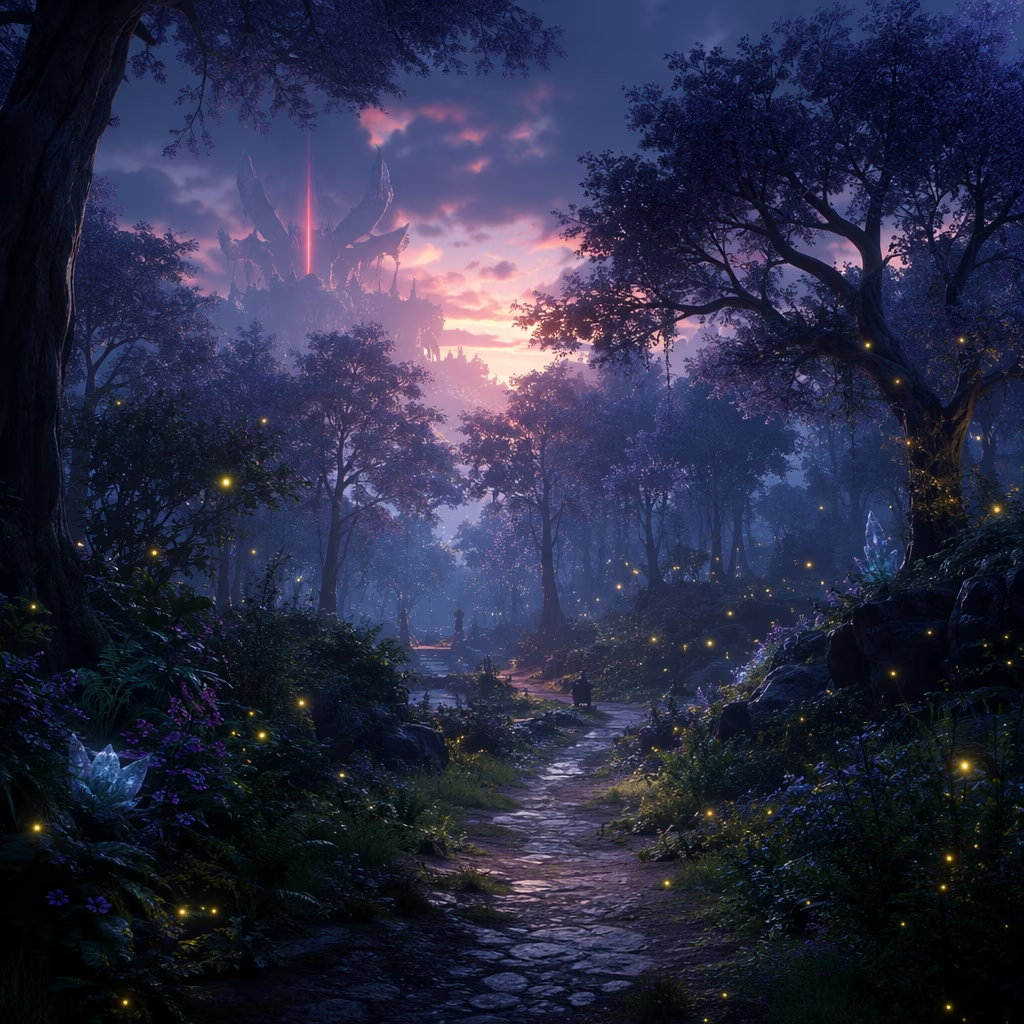
Learning how to make Charcoal became a rite of passage. The recipe is brutally simple: five logs for one piece of Charcoal. It’s a ratio that feels almost cruel when you’re counting every swing of your axe, but there’s a meditative rhythm to it. I started wandering the forested patches near my territory, axe in hand, hyper-aware of every snapping twig that could herald a Deviant attack. Chopping a tree in this world is like puncturing a lung full of anxiety—you hope the exhale doesn’t attract something hungry. Once I’d gathered enough logs, bruised and battle-worn, I’d carry them back like a pilgrim bearing offerings to a temperamental god.
The next step was always the hardest: building the Furnace itself. To unlock its schematic, I dove into the Memetics menu (a tap of the ‘K’ key that felt like opening a cogitator from a forgotten age). Under the Memetics - Cradle section, nestled in the Infrastructure tab, was a branch labeled Smelting Essentials. Spending those hard-earned Ciphers on it felt like a gamble. Unlocking that node gave me the blueprint, but blueprints alone are just paper ghosts. A Furnace needs copper ore and gravel to manifest. Copper was a teeth-gritting game of scouring rocky outcrops while dodging packs of feral dogs that moved like spilled ink through the underbrush. Gravel was simpler, yet somehow just as punishing—whacking at stone deposits until my arms ached and my mind wandered to grave thoughts.
When I finally placed that Furnace on my territory, it looked less like a machine and more like a promise forged in scrap metal. I loaded the logs and lit the fire. The first batch of Charcoal emerged not as a mere crafting component, but as something akin to a compressed diary entry of the tree’s former life—a dark, brittle memory of sunlight transformed into survival fuel. The process itself was a metaphor I clung to: I was burning my effort to refine my future. Another metaphor settled in as I watched the flames dance. The Furnace’s roar became the second heartbeat of my base, a rhythmic thumping that assured me I was still alive and still fighting against the Stardust’s creeping decay.
With Charcoal fueling my ore smelting, the entire game shifted. Copper ingots poured out, then iron, then steel, each one a stepping stone to weapons that could actually stagger the nightmare creatures stalking the horizon. I’d stumbled into a truth that every veteran survivor knows: Charcoal is not just a resource. It’s the quiet engine of progress in a world determined to drag you back into the dirt. Now, whenever I smell the acrid bite of a Furnace at work, I don’t just smell burning wood. I smell doors opening—to territories better fortified, to Deviants forced back into the shadows, and to a stubborn hope that maybe, just maybe, humanity can claw its way out of this Stardust-laced hell.