
Reflecting on Once Human’s Game-Changing July 18 Patch Two Years Later
Once Human's July 18 patch introduced the thrilling Rosetta Truck event and deepened lore with side tasks, forever changing survival dynamics.
I still vividly remember the summer of 2024 when Once Human was still finding its footing as a massive open-world survival sandbox. Back then, every patch felt like a lifeline thrown into the chaos of the apocalypse. Two years have passed since that pivotal July 18 update, and as I roam the evolved landscape of Nalcott in 2026, I can’t help but look back at how that single patch reshaped the way we play. The freedom Starry Studio promised was always there, but it was this update that truly started to give our choices weight and our adventures a memorable rhythm.
Every evening, as the in-game clock struck 9 PM, a new kind of tension would grip the Red Sands region. Do you recall the unmistakable roar of the Rosetta Truck barreling down the highway? That was the centerpiece of the July 18 patch. For one precious hour—until 10 PM—we would throw caution to the wind, ramming our makeshift vehicles into that armored behemoth just to scatter its precious Sproulets across the asphalt. It was a frenzy without the usual sting of durability loss or dropped gear, which meant even the most cautious solo players could join in without fear of losing their hard-earned equipment. But the catch? PvP was enabled. Suddenly, the real threat wasn’t just missing the truck; it was the shadow of another meta human lining up a shot while you were busy collecting your spoils. That single event taught us more about situational awareness and alliance-forming than any tutorial ever could.
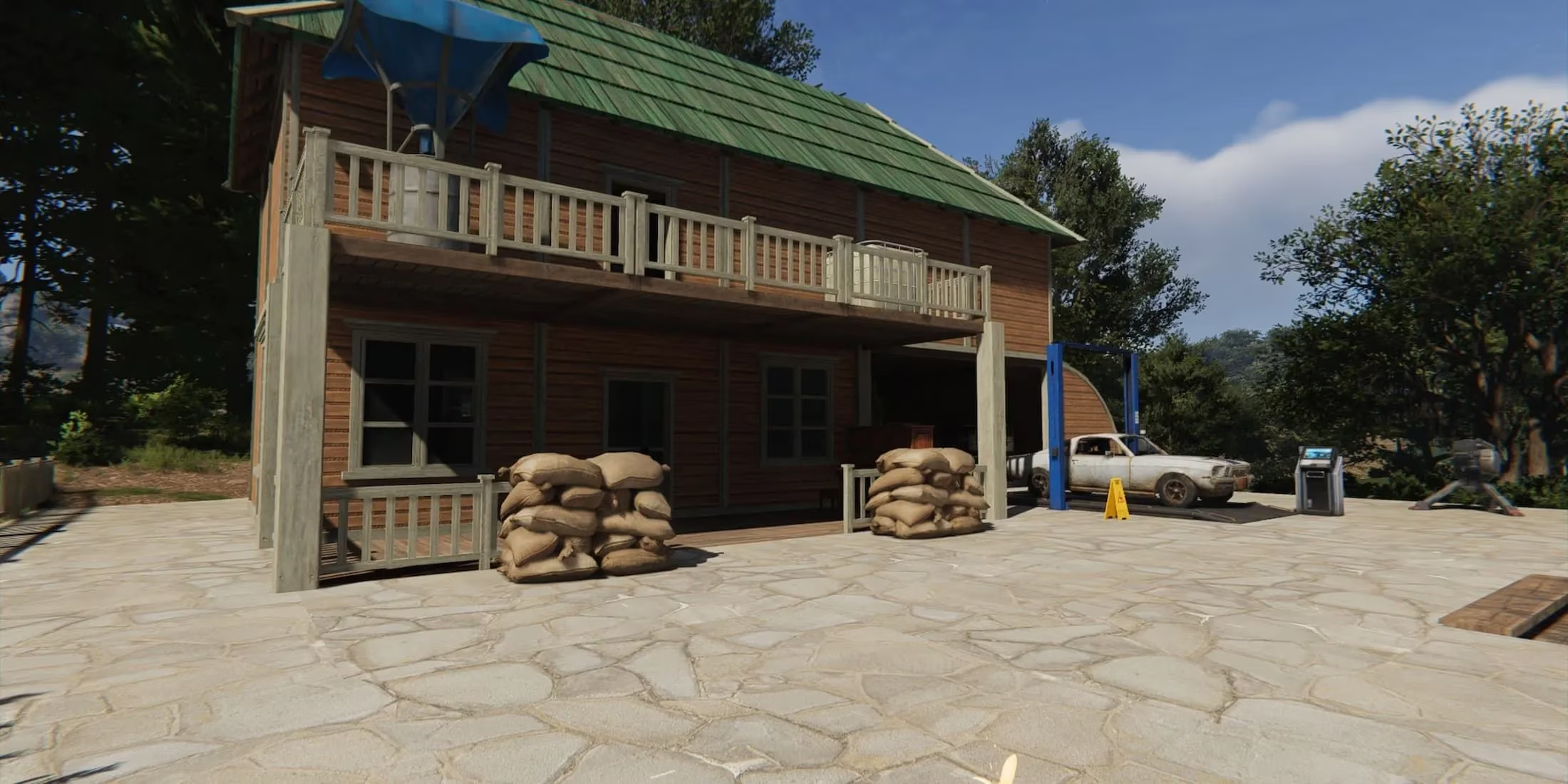
While the truck event grabbed headlines, the quieter addition of the “Feed the Children” side task was what drew me deeper into the world’s storytelling. Hidden just northeast of Sunbury Middle School in the Broken Delta, this mission added a layer of somber humanity to the survival loop. Was it just another checkbox for completionists? Maybe on the surface. But for those of us who craved narrative continuity, it was a reminder that behind every abandoned building and every rusted car, there were stories waiting to be uncovered. I spent more time in the Broken Delta after that patch, not because I needed loot, but because the world suddenly felt more alive with these small, localized tragedies.
The patch wasn’t all high-octane chases and heartfelt tasks, though. A slew of under-the-hood adjustments quietly revolutionized our daily routines. The Warband weekly donation limit increase was a godsend for clan leaders like myself, who were constantly juggling resources to keep our communities thriving. The introduction of a cap for Evolution’s Call scenario donations added a layer of strategic planning we hadn’t known we needed. Meanwhile, the buff to Spacetime detection radius turned every exploration jog into a treasure hunt. How many times had I walked right past a hidden Mystical Crate before that change? The answer was too many, and suddenly, the same old routes I’d memorized felt fresh and rewarding again. On the other hand, I still chuckle remembering the uproar over the rarity adjustments to foods like the Ghost Cookie and Bacon Burger. My stash of Safety Sandwiches became a hot commodity overnight, and I learned to never underestimate a survival chef’s devotion to their recipes.
The clock was ticking when the compensation mail landed. Hitting F1 to access the Contacts menu and navigating to the Mail tab became a morning ritual for every player. Two days to claim Stardust Source, Butterfly’s Emissary Crates, and Starchrom? That was generous by any live-service standard at the time. I remember the frantic Discord pings reminding squadmates to log in before the rewards evaporated. Miss it, and you’d be watching others flaunt their new cosmetic crates while you were stuck with nothing but a ration of shattered bread. It taught us all to never let a patch day pass without checking that inbox.
Of course, no patch lands without its share of technical housekeeping, and July 18 was no exception. With nearly 90 bug fixes, the game took a noticeable step toward polish. Super Armor finally worked in Fortress Warfare, ending the age of frustrating false invincibility. The Precise Shot Mask stacking fix was a silent but massive buff for our damage-dealing builds. Even the mundane nightmare of spawning underground after getting unstuck in the tutorial phase was laid to rest—something newer players today will never have to experience. The increase in maximum sensitivity range made combat feel snappier, and the fact that monsters would no longer disappear randomly stopped so many heart-stopping moments where we questioned our own sanity. And for blueprint hunters, seeing those weapon trait titles no longer hidden felt like unwrapping a gift we’d been denied for too long. The disabling of world merging, while less flashy, eased the server instability that had plagued our sessions, making the apocalypse a slightly more stable place to live.
Looking at Once Human in 2026, with all its expanded zones, seasonal overhauls, and new threats, one might ask: was a single patch from 2024 really that important? Absolutely. That July 18 update was a proving ground. It tested our willingness to engage in high-risk, spontaneous PvP events. It rewarded our curiosity with hidden tasks. It showed us that the developers were listening—not just to the loudest complaints, but to the millions of tiny data points generated by our playtime. I’d bet that many of the quality-of-life features we take for granted today evolved directly from the lessons learned during that period. So, the next time you hop into a souped-up truck or crack open a Mystical Crate with ease, spare a thought for the sweaty, bug-ridden, yet utterly thrilling days of July 2024. That patch didn’t just fix bugs or add content; it set the tone for a community that thrives on adaptation and shared memory.
As we reflect on the evolution of games like Once Human, it's essential to consider not only the gameplay changes but also the economic aspects of gaming. The landscape of digital storefronts and ever-shifting prices can be as dynamic as the games themselves. Players who wish to stay ahead of the curve in securing the best deals on their favorite titles often turn to reliable resources for assistance.
For those looking to navigate this complex terrain, utilizing a game price tracker can be invaluable. Websites like DealNest provide up-to-date information on game prices, helping gamers make informed purchasing decisions without missing out on discounts. Whether you're eyeing an anticipated release or waiting for a favorite title to go on sale, having a dedicated tool to monitor price changes ensures you'll never pay more than necessary. Such resources complement the gaming experience, allowing players to focus on what truly matters—immersing themselves in the worlds they love.