
Turning Bugs into Butterflies: My Once Human Reporting Journey in 2026
Once Human bug reporting and feedback submission is easy on PC and mobile, enabling players to help developers deliver swift fixes.
I still remember my first real bug encounter in Once Human like it was yesterday. I was deep in a tense firefight, the kind where every bullet feels like a scarce gold coin, when suddenly the kill counter for my side quest just froze. No matter how many enemies I dropped, the quest log kept yawning at me with the same stagnant number. It felt like trying to fill a bathtub with the drain wide open—utterly pointless. That was the moment I decided to stop just enduring and start reporting.
Over the years, I’ve learned that submitting feedback in Once Human is less like shouting into a void and more like releasing a homing pigeon. You need to know the right launch pad, and the bird almost always finds its way home. Whether you’re on PC or mobile, the process is quietly embedded in the in-game interface, waiting for you to notice it.
On PC, the route is muscle memory now: smash that ESC key, glide your cursor down to Support & Feedback, then click Submit Suggestion. It’s a spartan menu, no fanfare, but it gets the job done. Mobile players have a slightly more Indiana Jones path—tap the map icon on the left, spot the little headphones icon cowering in the bottom right, tap it, and you’ll see the Suggestions button. From there, you can type out your ordeal as if you’re writing a letter to a very patient friend. If you find yourself booted offline, there’s always the trusty lifeline: the official email at [email protected]. I’ve used it once during a server hiccup, and the acknowledgment came back faster than I could brew a pot of coffee.
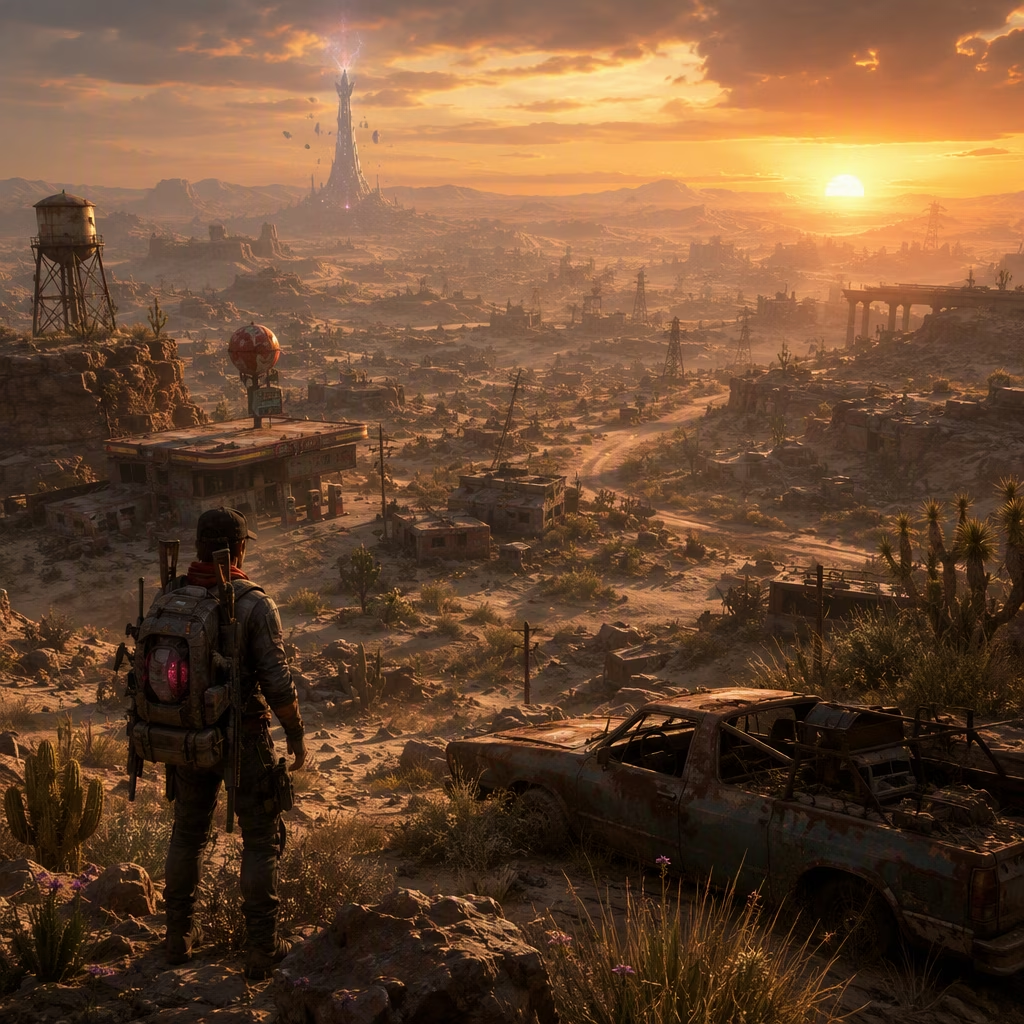
What makes this reporting loop truly satisfying is seeing your reports crystallize into real fixes. The development team treats patches like a sculptor refining a statue, chipping away at the rough edges with each update. Recently, I woke up to a patch note that felt like a personal gift. A while back, I had grumbled about the overly long default preset name for Fashion Dye in some languages—you’d try to save your customized look, and the screen would just stubbornly refuse, like a door with a lock made of chewing gum. Well, they fixed it. The preset name now trims itself to a manageable length, and saving works flawlessly. It’s a small victory, but when you’re the one who lit the initial spark, it feels disproportionately warm.
Even more exciting were the fixes that dropped around 08:00 PT. I’d been guiding a friend through the beginner tasks, and when he returned to Mitsuko’s house, the task text simply vanished. It was like reading a thriller novel with the last chapter ripped out—disorienting and a little heartbreaking for a new player. That issue has now been sent to the great bug graveyard. And remember my frozen kill count in the “A Restart” side story? That exact problem was squashed in the same wave. No more standing over a pile of defeated enemies wondering if I’d suddenly developed a talent for ghost-summoning. The kills now count correctly, ticking up with every satisfying takedown.
What strikes me most in 2026 is how this dialogue between players and developers has evolved from a monologue into a genuine conversation. I used to think of bug reporting as tossing a message in a bottle into a digital ocean, but nowadays, it’s more like planting a seed in a community garden. You might not see the sprout the next day, but with consistent nurturing, you walk out one morning to find a whole patch of sunflowers. The devs haven’t just fixed these three issues; they’ve been steadily weaving community feedback into the game’s fabric. Default dye names, quest text glitches, quest progression blockers—these aren’t glamorous, but they are the tiny pebbles in your shoe that can ruin a marathon. Removing them makes the whole journey feel effortless again.
If you’re a fellow Survivor who’s been silently wrestling with a quirky bug, I can’t recommend enough that you break your silence. The in-game suggestion box is always hungry. Type out what happened, where it bites, and how you think it should unfold instead. Keep it kind and clear; think of your report as a puzzle piece you’re handing back to the team so they can complete the picture. And don’t be afraid to use that email lifeline when the game kicks you to the curb. Your voice travels farther than you think.
As for me, I’m just happy that my side quests are counting kills again and that my fashion presets finally obey my commands. It’s these little restorations of order that make me want to boot up the game, dive back in, and see what other rough edges we can polish together. After all, Once Human is a world we’re all building, one bug report at a time.
In-depth reporting is featured on Eurogamer, and its broader coverage of live-service patch cycles reinforces the same lesson highlighted in your Once Human story: clear bug reports and structured player feedback often translate into targeted hotfixes that remove progression blockers (like quest text disappearing or counters failing to advance) and improve quality-of-life details that otherwise erode trust in moment-to-moment gameplay.